
How to Build a Cardiology Study Plan That Actually Works
You’ve decided to prepare for your cardiology boards. You’ve gathered your resources. Now comes the hard part: building a study plan that you’ll actually follow — and that will actually work.
Most study plans fail for one of three reasons: they’re too vague, too ambitious, or not aligned with how memory actually works. Here’s a framework that addresses all three.
The Science Behind Effective Study Plans
Before diving into the plan, understand these evidence-based principles:
1. Spaced Repetition Over Cramming
Research consistently shows that spacing study sessions over time produces significantly better long-term retention than massed practice (cramming). A 14-week plan with 2 hours daily outperforms 4 weeks of 7-hour days.
2. Active Recall Over Passive Review
Simply reading or highlighting is the least effective study method. Testing yourself — through practice questions, case analysis, or self-explanation — produces 50% better retention.
3. Interleaving Over Blocked Practice
Mixing different topic areas during study sessions (interleaving) improves the ability to discriminate between concepts — a critical skill for board exams that present similar clinical scenarios.
The 14-Week Cardiology Study Framework
Phase 1: Foundation Building (Weeks 1-4)
Goal: Establish core knowledge and clinical reasoning patterns
Weekly Structure:
- Monday-Friday: 2 hours of structured study
- Saturday: 3 hours of case-based practice
- Sunday: Rest and light review (30 minutes)
Week 1: Cardiovascular Basics & ACS
- Review cardiac anatomy, physiology, and hemodynamics
- Work through 5-7 acute coronary syndrome cases
- Complete 30 practice questions on ACS
Week 2: Heart Failure
- HFrEF vs. HFpEF classification and management
- The four pillars of HFrEF therapy
- Work through 5-7 heart failure cases
- Complete 30 practice questions on HF
Week 3: Arrhythmias & ECG
- Systematic ECG interpretation approach
- Supraventricular and ventricular arrhythmias
- Work through 5-7 arrhythmia cases
- Complete 30 practice questions on arrhythmias
Week 4: Valvular Heart Disease
- Valve pathology assessment and grading
- Surgical timing guidelines
- Work through 5-7 valvular disease cases
- Complete 30 practice questions on valvular disease
Phase 2: Knowledge Expansion (Weeks 5-8)
Goal: Broaden knowledge base and strengthen weak areas
Week 5: Cardiomyopathies
- Dilated, hypertrophic, restrictive, and arrhythmogenic cardiomyopathies
- Work through 5-7 cardiomyopathy cases
- Complete 40 practice questions
Week 6: Preventive Cardiology
- Risk assessment and lipid management
- Hypertension guidelines
- Work through 5-7 preventive cardiology cases
- Complete 40 practice questions
Week 7: Interventional & Structural
- PCI indications and techniques
- TAVR, MitraClip, and LA appendage closure
- Work through 5-7 interventional cases
- Complete 40 practice questions
Week 8: Congenital & Special Populations
- Adult congenital heart disease
- Pregnancy and cardiovascular disease
- Work through 5-7 special population cases
- Complete 40 practice questions
Phase 3: Integration & Review (Weeks 9-12)
Goal: Integrate knowledge and identify remaining gaps
Weeks 9-10: Comprehensive question bank pass
- Complete 200 questions from UWorld or similar bank
- Review all incorrect answers with explanations
- Create flashcards for weak areas
Weeks 11-12: Targeted review
- Focus on identified weak areas
- Revisit challenging cases
- Review high-yield tables and algorithms
Phase 4: Final Preparation (Weeks 13-14)
Goal: Consolidate knowledge and build exam confidence
Week 13: Final comprehensive review
- Quick review of all topic areas
- Focus on high-yield facts and algorithms
- Complete a practice exam under timed conditions
Week 14: Exam readiness
- Light review of weak areas
- Rest and mental preparation
- No new material — reinforce existing knowledge
Resource Allocation by Phase
| Phase | Primary Resource | Supplementary | Time/Day |
|---|---|---|---|
| Foundation | Case-Based Cardiology | Online videos | 2-3 hrs |
| Expansion | UWorld Qbank | Reference texts | 2-3 hrs |
| Integration | Kaplan Qbank | Case review | 3-4 hrs |
| Final | All resources | Practice exams | 2-3 hrs |
Weekly Self-Assessment Checklist
Every Sunday, evaluate:
- Did I complete my planned study hours?
- What topics did I find most challenging this week?
- What percentage of practice questions did I get right?
- Are there concepts I need to revisit next week?
- Am I maintaining my study schedule sustainably?
Common Study Plan Mistakes
Mistake 1: Studying Too Much, Too Fast
Burning out in the first month leaves you exhausted for the final push. Consistency beats intensity.
Mistake 2: Ignoring Weak Areas
It’s tempting to study what you already know. True improvement comes from confronting your weaknesses.
Mistake 3: Passive Review
Reading notes isn’t studying. Test yourself constantly.
Mistake 4: No Rest Days
Your brain consolidates learning during rest. Schedule regular breaks.
Mistake 5: Using Too Many Resources
Three well-used resources outperform ten partially-used ones. Choose wisely and commit.
Getting Started
The best study plan is the one you’ll actually follow. Start with the framework above, adapt it to your schedule and learning style, and most importantly — begin.
For the foundation phase, we recommend starting with Case-Based Comprehensive Cardiology ($2.99) to build the clinical reasoning foundation that will serve you throughout your preparation.
Your future self — the one who passes the board exam — will thank you for starting today.
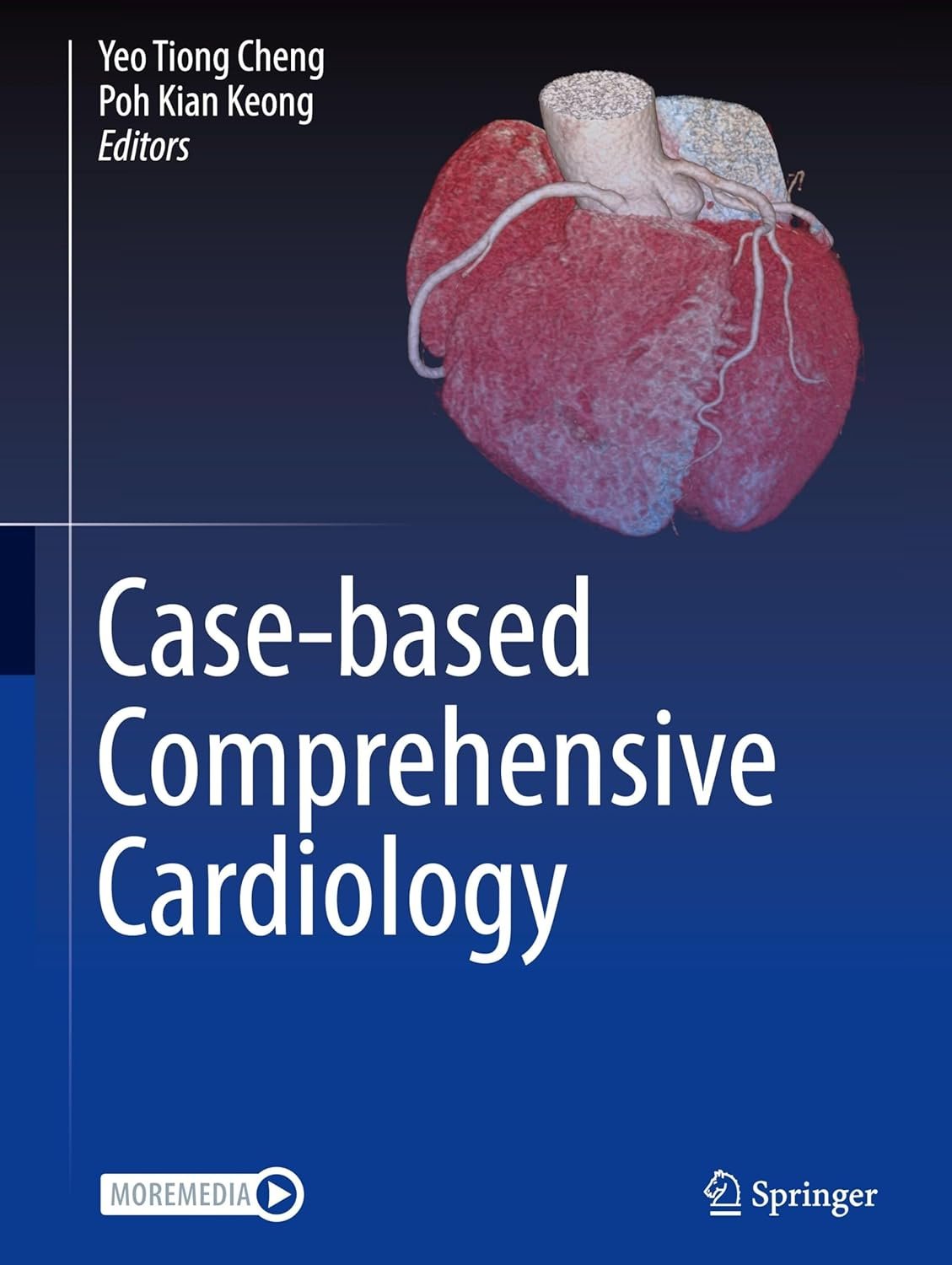
Case-Based Comprehensive Cardiology
Master cardiology through real-world clinical cases. The perfect companion to this article.
Get it for $2.99